English
 français
 Deutsch
 русский
 español
 português
 日本語
日本語 한국의
한국의 العربية
 中文
中文
You want the best connectivity for your critical applications. rf over fiber (rfof) gives you unmatched signal performance, making it the smart choice for reliable connectivity. With rf over fiber, you experience minimal signal loss even over long distances, and you avoid electromagnetic interference. Industry experts point to these advantages:
-
rf over fiber (rfof) supports link distances over 100km without degrading signal quality.
-
You benefit from low signal loss, flat frequency response, and immunity to interference.
-
The technology delivers secure, lightweight, and flexible connectivity.
-
rf over fiber (rfof) enables easy installation and low maintenance.
You see rf over fiber in action wherever connectivity matters most, including connecting remote antennas, distributing signals in cable TV, and enhancing wireless coverage in challenging environments. Modern rf-over-fiber solutions like Sanland Tech’s link let you meet your connectivity needs with confidence.
Key Takeaways
-
RF over fiber (RFoF) provides minimal signal loss over long distances, ensuring high-quality performance for critical applications.
-
This technology is immune to electromagnetic interference, making it reliable in noisy environments and enhancing signal integrity.
-
RFoF systems are lightweight and easy to install, reducing infrastructure costs and maintenance needs compared to traditional coaxial cables.
-
The flexibility of RFoF supports a wide range of frequencies, allowing for diverse applications from telecommunications to military use.
-
Investing in RFoF future-proofs your network, enabling easy upgrades to meet growing bandwidth demands and new technologies.
Signal Quality with RF Over Fiber
Long-Distance RF Transmission
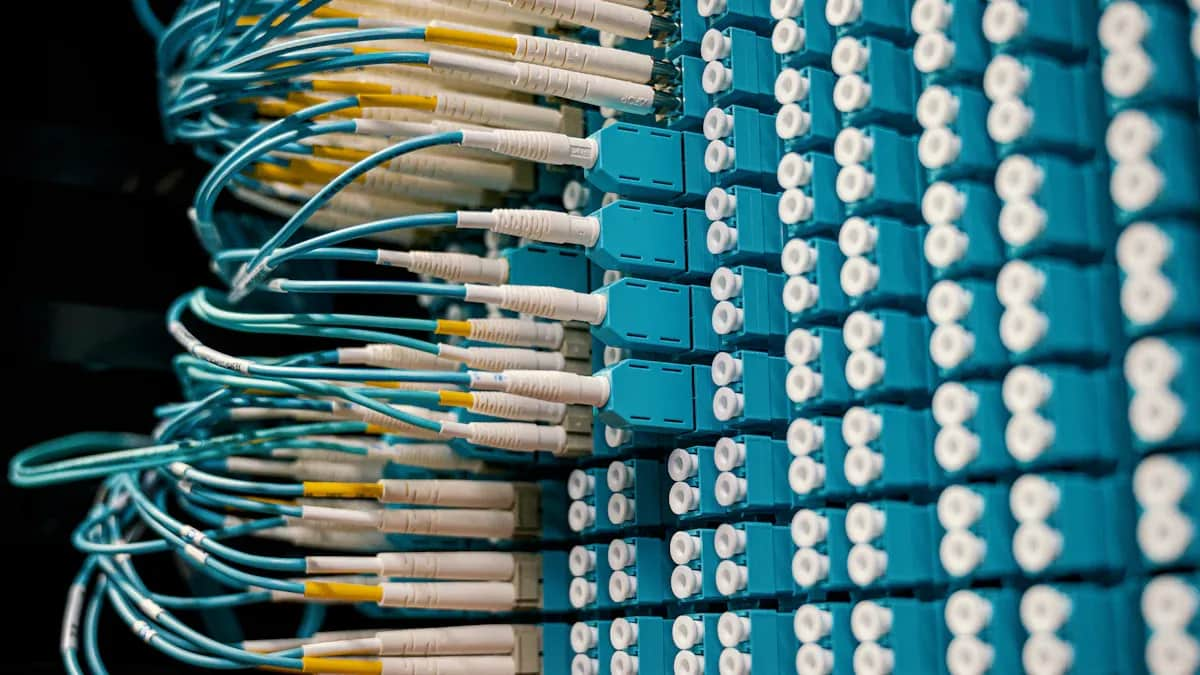
You need reliable rf performance over long distances. rf-over-fiber gives you a clear advantage. You can send rf signals across vast distances without worrying about signal loss or degradation. SM28 fiber, used in leading rf-over-fiber systems, delivers extremely low loss—just 0.25 dB per kilometer at 1550 nm. This means you maintain signal integrity even when your network stretches for miles.
-
You can trust rf-over-fiber for secure long-distance signal transmission.
-
SM28 fiber ensures your rf signals stay strong and clear.
-
You avoid the heavy losses that come with traditional coaxial cables.
You get support for a wide range of frequencies. Modern rf-over-fiber solutions handle everything from 5 MHz up to 6 GHz, covering both analog and digital signals. This flexibility lets you use one system for many different rf applications, from broadcasting to wireless communications.
Minimizing Loss and Interference
You face many challenges with traditional rf transmission. Coaxial cables introduce noise and attenuation, especially as distances increase. This can lead to poor signal-to-noise ratios and unreliable connections.
Traditional rf transmission faces significant signal degradation primarily due to the limitations of coaxial cables, which introduce noise and attenuation. For instance, coaxial cables can have losses ranging from 3 dB to 5 dB per 100 m in the 10 MHz to 100 MHz range, and up to 25 dB per 100 m from 100 MHz to 1 GHz. This degradation is exacerbated by the low received signal power and the presence of noise, leading to poor signal-to-noise ratios. In contrast, rf-over-fiber technology utilizes low-loss optical fibers to mitigate these issues, effectively replacing coaxial cables and improving overall signal integrity.
With rf-over-fiber, you eliminate these problems. Fiber is immune to electromagnetic interference, so your rf signals remain stable even in environments with high electrical noise. You also benefit from high linearity and a wide dynamic range. This means your system can handle both weak and strong signals without distortion, which is essential for demanding rf applications.
You can count on rf-over-fiber for long-distance links that deliver consistent, high-quality performance. You get the best of both worlds: the high-frequency capabilities of rf and the reliability of fiber. This combination makes rf-over-fiber the smart choice for anyone who values signal quality and secure long-distance signal transmission.
RFoF Reliability and Performance
Consistent Operation in Any Environment
You need a transmission system that delivers reliable results, no matter where you deploy it. RFoF stands out for its ability to maintain high performance in a wide range of environments, from industrial plants to military installations. You can trust RFoF to deliver consistent, interference-free signals even in locations with high electrical noise or extreme conditions.
Sanland Tech’s RF Over Fiber Link demonstrates this reliability through robust engineering and field-proven stability. You benefit from a system that adapts to your requirements, whether you need point-to-point or point-to-multipoint connectivity. The technology supports rapid signal processing and fast RF switching, which is essential for applications that demand real-time communication.
Consider the following advantages that make RFoF a dependable choice in challenging environments:
|
Advantage |
Description |
|---|---|
|
Reduced Signal Loss |
Fiber optics minimize signal loss over long distances, ideal for transporting test signals. |
|
Immunity to Electromagnetic Interference |
Ensures superior signal integrity in high-noise environments typical in EMC tests. |
|
Lightweight and Compact |
Facilitates easier handling and installation in confined spaces of aircraft. |
|
Inherent Isolation |
Eliminates risk to test equipment and personnel from high fields and lightning simulation tests. |
|
Flexibility and Scalability |
Allows for extended frequency and test configurations without compromising performance. |
You see these benefits in action during field testing in environments such as aircraft, industrial sites, and military bases. RFoF systems provide the flexibility and scalability you need to expand your network without sacrificing optimized performance.
Immunity to Electromagnetic Interference
You face many challenges when deploying RF systems in areas with high electromagnetic activity. Traditional copper-based cables, like coaxial, are vulnerable to electromagnetic interference and radio frequency interference. This vulnerability can lead to signal distortion, data loss, and security risks.
Fiber solves these problems by providing complete immunity to electromagnetic interference. You get reliable data transmission, even in environments filled with electrical noise. Fiber does not emit electromagnetic signals, making your communication links undetectable and resistant to jamming. This feature is especially valuable in military and industrial applications, where secure and interference-free signals are critical.
You also benefit from enhanced security. Fiber is naturally resistant to eavesdropping, which protects your sensitive information. The U.S. military relies heavily on fiber technology for these reasons, accounting for a significant portion of global demand.
With RF-over-fiber, you achieve consistent, high-quality RF transmission in any environment. You can count on stable operation, robust security, and immunity to interference, ensuring your system delivers the performance you require.
Cost-Effective and Scalable RF Solutions
Lower Infrastructure and Maintenance Costs
You want to maximize your investment and minimize ongoing expenses. RF-over-fiber gives you a clear advantage over traditional cable systems. You reduce the need for heavy, bulky cable runs, which often require frequent maintenance and replacement. Fiber offers a lightweight, durable alternative that stands up to harsh environments and resists corrosion. You see fewer failures and less downtime, which means your team spends less time troubleshooting and more time focusing on core operations.
Organizations that switch to fiber-based RF solutions report significant savings. You lower operational costs because fiber cross connects require less maintenance and last longer than copper cable. You can test more devices at once, which increases efficiency and reduces overall testing costs. In lab automation, you achieve a higher return on investment due to improved reliability and streamlined processes.
|
Benefit |
Description |
|---|---|
|
Reduced OPEX |
Switching to optical fiber cross connects leads to significant reductions in operational costs. |
|
Efficient Testing |
More devices can be tested simultaneously, lowering overall testing costs. |
|
Enhanced ROI |
Improved efficiency in test lab environments boosts return on investment for lab automation. |
Easy System Expansion
You need a solution that grows with your business. RFoF makes network expansion simple and cost-effective. With Wavelength Division Multiplexing (WDM), you transmit multiple data streams over a single fiber. This approach increases capacity without the need for new infrastructure. You avoid the high costs and logistical challenges of laying additional cable, especially in difficult environments.
-
WDM lets you deliver multiple services over one network, making the most of your existing fiber.
-
You support higher data rates and introduce new technologies alongside current systems.
-
You gain flexibility, which is essential when deploying new services or upgrading your network.
RF-over-fiber systems integrate seamlessly with your current RF infrastructure. You use appropriate interfaces and converters to extend or replace parts of your existing cable network. Customizable solutions bridge legacy systems with next-generation RFoF capabilities, enhancing reliability and preparing you for future upgrades. Compatibility with standard single-mode fiber ensures easy deployment and exceptional signal integrity.
|
Feature Description |
Purpose |
|---|---|
|
Integration with traditional RF systems using appropriate interfaces and converters. |
Extends or replaces parts of existing RF distribution networks. |
|
Customizable solutions that bridge legacy systems with next-gen RFoF capabilities. |
Enhances reliability and future scalability. |
|
Compatibility with SMF infrastructure. |
Simplifies deployment while ensuring exceptional signal integrity. |
You future-proof your network and maintain high efficiency by choosing fiber-based RF solutions. You position your organization for growth without the burden of escalating costs or complex upgrades.
Simplified RF-Over-Fiber Deployment
Quick Installation
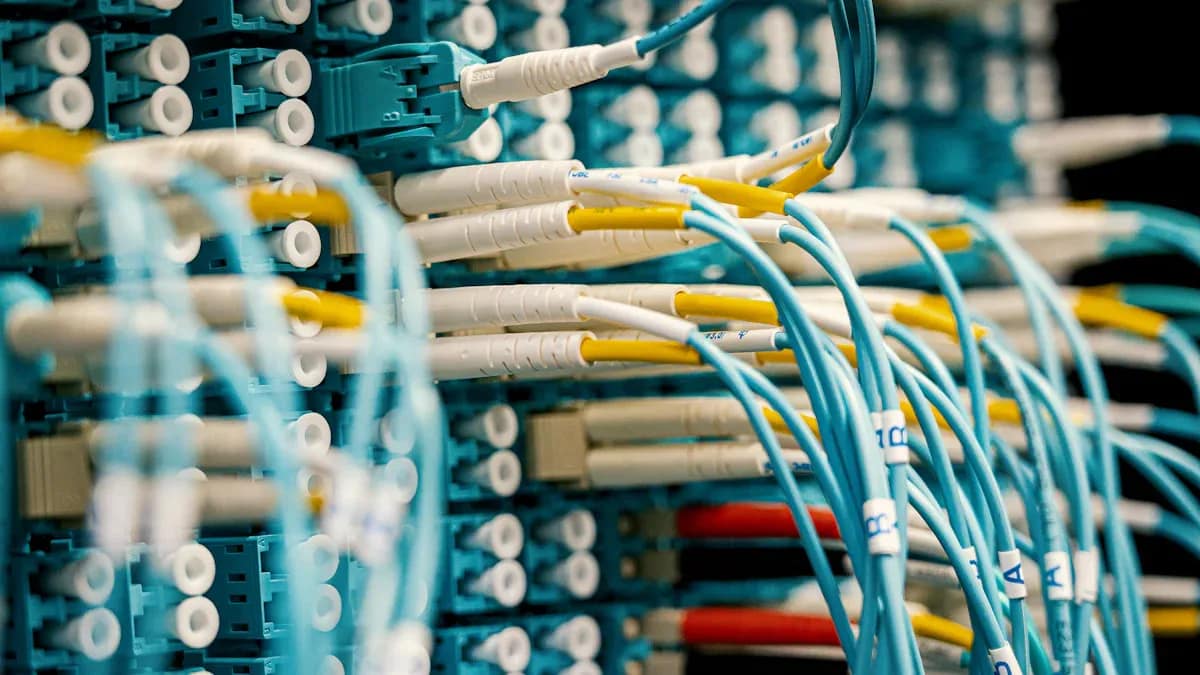
You want a system that installs quickly and delivers immediate results. rf-over-fiber technology streamlines the deployment process, letting you set up high-performance links with minimal effort. You can use standard fiber optic cable, which is lightweight and easy to handle. This reduces the time and labor required for installation compared to traditional copper solutions.
You benefit from compatibility with both 1310 nm and 1550 nm wavelengths. This flexibility allows you to tailor your deployment to the unique needs of your site. Many organizations use 1310 nm for transmitters at one point and 1550 nm for receivers at another. This approach minimizes signal loss over short distances and lowers the noise floor for long-haul connections.
|
Wavelength |
Application |
Advantages |
|---|---|---|
|
1310 nm |
Transmitter at point A |
Lower loss over short distances |
|
1550 nm |
Receiver at point A |
Lower noise floor over long distances |
You can operate bi-directional links by assigning different wavelengths for transmission and reception. This design supports high performance with low signal loss and minimal distortion.
Seamless Integration
You need your new rf system to work with your existing infrastructure. Integrating rf-over-fiber solutions with legacy equipment can present challenges, but modern systems address these issues with advanced engineering. You may encounter technical complexity and compatibility concerns, especially when working with older hardware. Custom engineering and precise calibration often resolve these challenges, ensuring reliable performance.
Many organizations report that initial deployment requires specialized expertise. You may need skilled technicians to handle integration and calibration, especially in sectors like defense or telecommunications. Despite these hurdles, you gain a future-ready network that supports flexible expansion and adapts to evolving requirements.
-
You can connect new modules to legacy systems with the right interfaces.
-
You achieve consistent performance, even in demanding environments.
-
You position your organization for growth with a scalable, adaptable solution.
By choosing fiber, you simplify installation, reduce downtime, and ensure your network meets the highest standards for reliability and performance.
Future-Proofing with RF Over Fiber (RFoF)
Supporting Evolving Bandwidth Needs
You face a rapidly changing digital landscape. Every year, new applications demand more data and faster speeds. RF over fiber technology gives you the flexibility to meet these challenges. You can support high-bandwidth links that keep pace with the growth of 5G, streaming, and cloud services. As your network expands, you need solutions that deliver reliable performance without constant upgrades.
Note: The telecommunications industry is experiencing rapid growth due to the development of 5G and next-generation networks. RF over fiber plays a crucial role in supporting high-speed, high-capacity data transmission for these modern networks.
You can see the advantages of this technology in the table below:
|
Aspect |
Description |
|---|---|
|
High Bandwidth Capacity |
RF over fiber provides the bandwidth needed for modern communication networks. |
|
Low Signal Loss |
You minimize signal degradation, even over long distances. |
|
Immunity to Interference |
Fiber resists electromagnetic interference, ensuring clear signals. |
|
Applications |
Used in telecom, military, satellite, and broadcasting systems. |
You benefit from a system that adapts to growing bandwidth requirements. The demand for high-speed internet and the expansion of telecommunication networks drive the need for infrastructure that supports higher bandwidths and faster data rates.
Adapting to New Technologies
You want your investment to last. RF over fiber solutions adapt easily to new technologies. You can upgrade your network to handle higher frequencies and advanced applications, such as 5G, satellite communications, and future wireless standards. This adaptability ensures your system remains relevant as industry standards evolve.
-
RF over fiber supports high bandwidths, even above 40GHz, which is essential for 5G and beyond.
-
You can deploy low-loss transmission for massive MIMO antenna arrays and advanced satellite systems.
-
The technology integrates with 5G, 6G, enhanced modulation, digital signal processing, and open radio access networks.
You prepare your network for the future by choosing a solution that grows with your needs. As the market for RF over fiber expands, you gain a scalable, reliable foundation for tomorrow’s communication challenges.
You gain a future-ready network when you choose rf over fiber. The technology delivers reduced latency, enhanced bandwidth, and improved coverage, as shown below:
|
Metric |
Advantage of RF Over Fiber |
|---|---|
|
Latency |
Reduced latency compared to traditional RF systems. |
|
Bandwidth |
Enhanced bandwidth capabilities for data transmission. |
|
Coverage |
Improved coverage capabilities due to reduced amplification needs. |
|
Signal Integrity |
Better signal integrity with less susceptibility to interference. |
|
Security |
Increased security with reduced risk of signal leakage. |
Projects like Lit San Leandro show how fiber solutions drive economic growth and support new services. When you evaluate RFoF, consider tailored design, ROI, vendor reliability, integration support, training, and ongoing technical assistance. Sanland Tech’s solutions help you achieve reliable, scalable, and secure transmission for your next upgrade.
FAQ
What is RF over Fiber (RFoF)?
RF over Fiber lets you transmit radio frequency signals using optical fiber. You get high-quality, long-distance signal delivery with minimal loss. This technology supports both analog and digital RF signals.
Where can you use RFoF systems?
You can use RFoF in telecommunications, broadcasting, military, and satellite communications. The technology works well for connecting remote antennas, distributing signals in buildings, and supporting wireless networks.
How does RFoF improve signal quality?
You avoid electromagnetic interference and reduce signal loss with RFoF. Fiber optics keep your RF signals clear and strong, even over long distances.
Is RFoF easy to install and expand?
You install RFoF quickly using standard fiber cables. You can expand your system easily with Wavelength Division Multiplexing (WDM), which lets you add more channels without new fiber runs.



 IPv6 network supported