English
 français
 Deutsch
 русский
 español
 português
 日本語
日本語 한국의
한국의 العربية
 中文
中文
Wideband RF transport
Three RFoF architectures for remote management, compact analog/digital integration and plug-and-play RF transmission over single-mode fiber.
Three link architectures
Side-by-side
Compare RF performance, optical configuration and management capabilities to identify the right link for your system.
On smaller screens, swipe the table horizontally to view all three products.
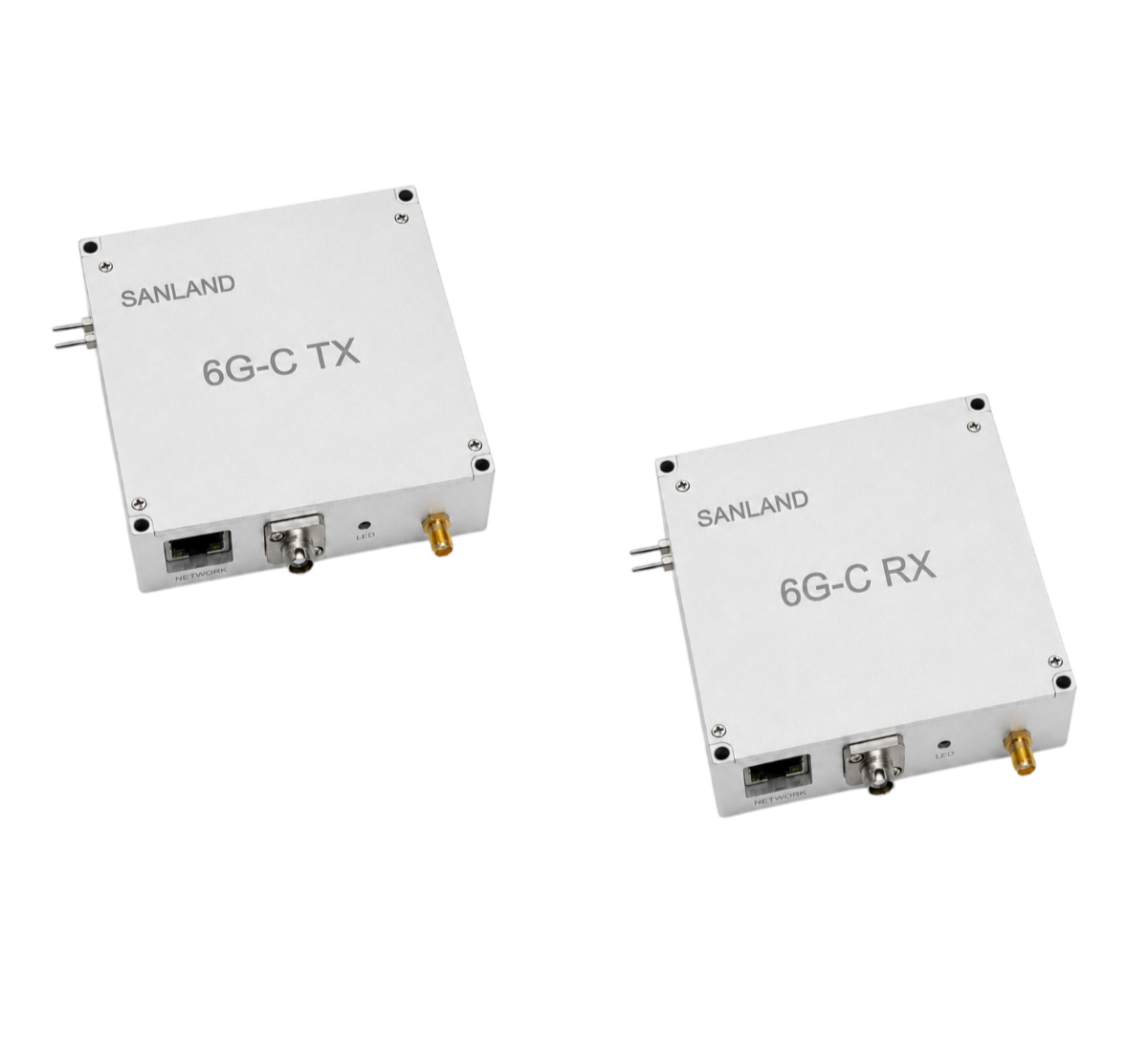
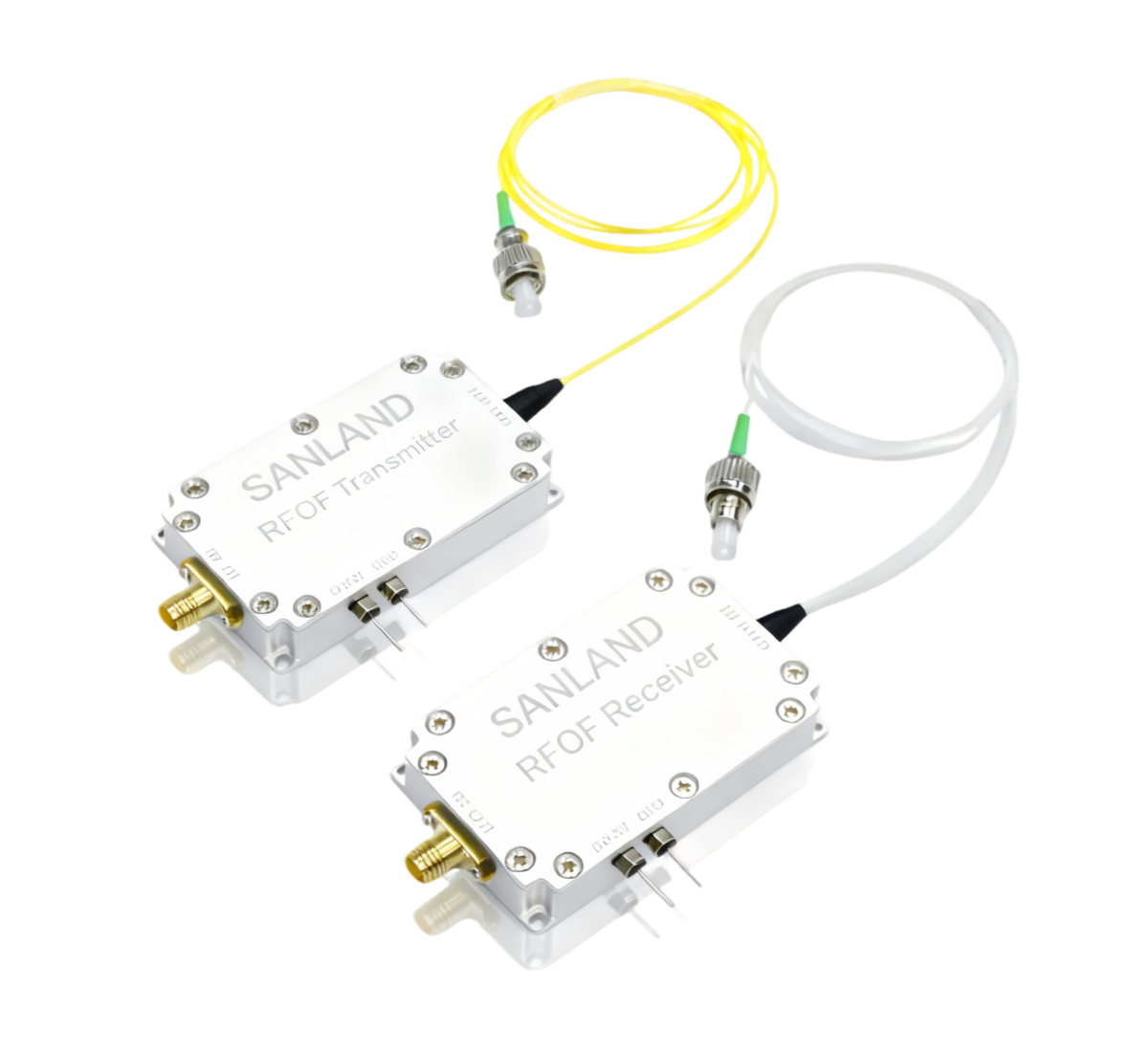
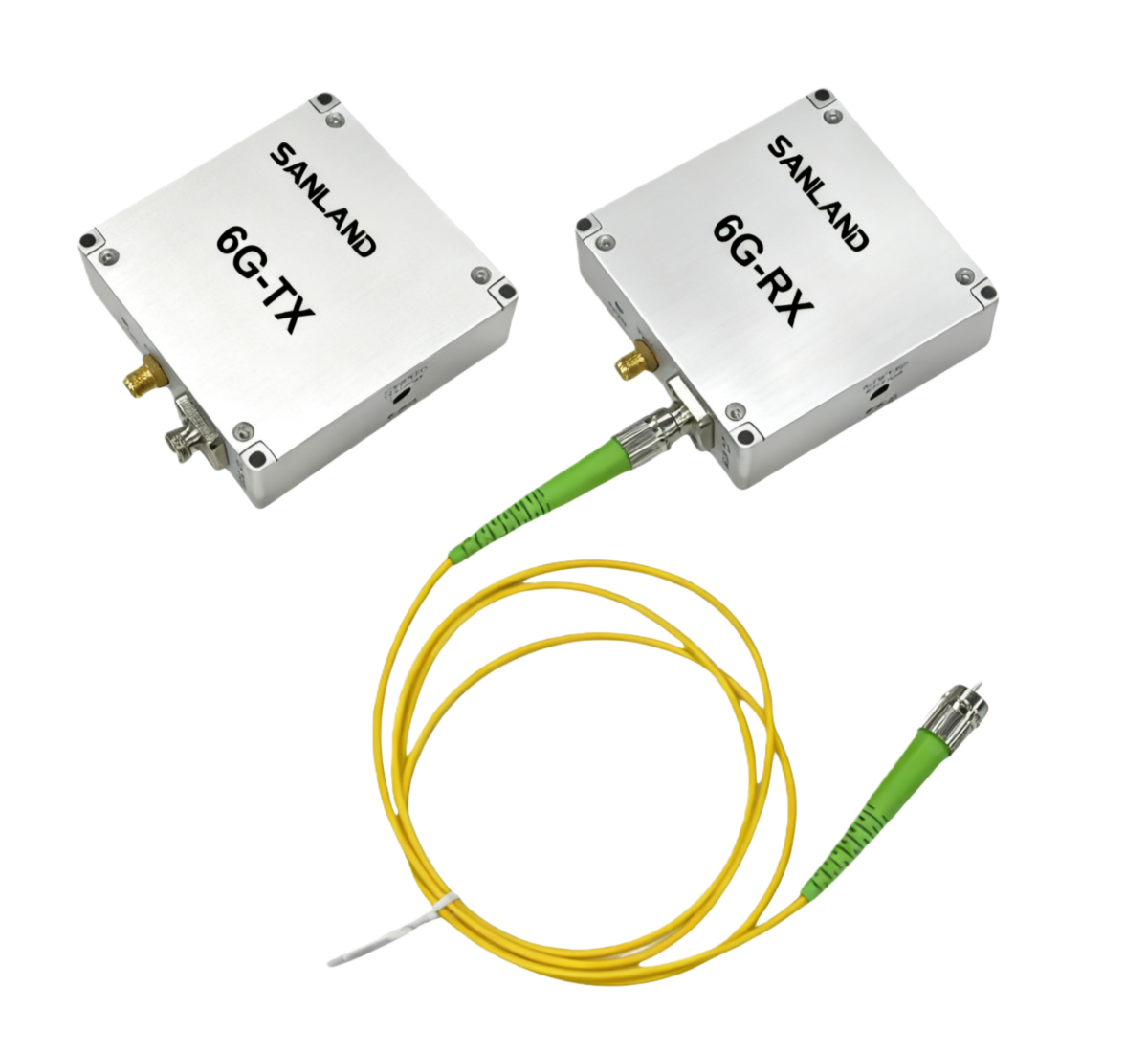
| Selection parameter | Remote-Controlled RF Over Fiber | Compact Analog/Digital RF Over Fiber | Plug-and-Play RF Over Fiber Module |
|---|---|---|---|
| Positioning | REMOTE MANAGEMENT | COMPACT ANALOG / DIGITAL | PLUG & PLAY |
| Frequency range | 5 MHz–6 GHz | 5 MHz–6 GHz | 5 MHz–6 GHz |
| Signal format | Analog RF | Analog and digitally modulated RF | Analog RF |
| Link gain | 6 dB / 36 dB* | 20 dB | 20 dB |
| Gain flatness | ±2.5 dB | ±3 dB | ±2.5 dB |
| Gain flatness, any 36 MHz | ±0.5 dB | — | ±0.25 dB |
| SFDR | 103 / 98 dB·Hz2/3* | 90–104 dB·Hz2/3 | 104 dB·Hz2/3 |
| IIP3 | — | 33 dBm typical | — |
| Programmable attenuation | 0–31 dB1 dB steps | — | — |
| Remote interface | RJ45 Ethernet | — | — |
| Remote monitoring | RF level and temperature | — | — |
| Optical output power | 2 ±0.5 mW | 3 mW typical | 3 ±0.5 mW |
| Optical wavelength | 1550 nm typical | 1310 or 1550 nm | 1310 or 1550 nm |
| Operating temperature | −20°C to +75°C | −20°C to +50°C | −20°C to +75°C |
| Dimensions | 92 × 90 × 25 mm | 64 × 39 × 12 mm | 70 × 83.5 × 23 mm |
| Best suited for | Remotely managed and unattended RF sites | Compact analog/digital RF links and space-constrained integration | Straightforward fixed-gain analog RF links without external control |
* RFoF-C:LNA OFF / ON
FAQ
An RF over fiber converter changes an electrical RF signal into an optical signal for transmission over fiber. At the receiving end, the optical signal is converted back to RF, allowing radio frequency signals to be transported over longer distances with lower cable loss than conventional coaxial links.
Yes. RF over fiber can replace long coaxial RF runs when cable loss, electromagnetic interference, weight or routing distance becomes a concern. The RF signal is converted to optical transmission over single-mode fiber and recovered at the receiving end.
Choose RFoF-C when remote control and monitoring are required, the Compact Analog/Digital RFoF for space-constrained analog or digitally modulated RF integration, and the Plug-and-Play Analog RFoF for straightforward fixed-gain analog transmission without external control.
It supports analog and digitally modulated RF signals from 5 MHz to 6 GHz, with 1310 nm or 1550 nm wavelength options.
Through its RJ45 Ethernet interface, RFoF-C supports 0–31 dB programmable attenuation in 1 dB steps, LNA ON/OFF control, and real-time monitoring of RF level and temperature.
Engineering support
Share your frequency range, input level, fiber distance and control requirements. Our team will recommend a suitable TX/RX configuration.



 IPv6 network supported 粤ICP备19046464号